Modern migraine research has converged on a remarkable insight: many of the headaches we call migraine may originate in a thin, pain-sensitive layer of tissue that sits between the skull and the brain — the dura (the membrane surrounding the brain) — and specifically in the blood vessels that supply it.
The middle meningeal artery (MMA) — the blood vessel that feeds the dura — is its main supply. When this system becomes overactive — through inflammation, vasodilation (widening of the blood vessels), or other mechanisms — it can activate the pain-sensing nerves in the dura and trigger a migraine attack.
This “MMA–dura pathway” is now considered one of the central mechanisms of migraine — and is exactly what TEMMA® is designed to address.
The outermost of three membranes that surround the brain and spinal cord. The dura is tough and fibrous, but also densely packed with pain-sensing nerve fibers — making it one of the most pain-sensitive tissues in the head.
A branch of the maxillary artery (a vessel deeper in the face) that runs along the inside of the skull and supplies most of the dura. It does NOT supply the brain itself — a critical point that makes procedures on this vessel safe.
The network of pain-sensing nerves — primarily branches of the trigeminal nerve, the main sensation nerve of the face and head — that supply the dura and its blood vessels. When activated, these nerves release inflammatory molecules that drive migraine pain.
Calcitonin gene-related peptide (CGRP) is a key chemical messenger in migraine. It is released from trigeminal nerve endings during an attack and causes vasodilation (widening of blood vessels) and inflammation. CGRP inhibitors are a major class of modern migraine drugs.
Here's the key insight: most of the medications that work for migraine — including the newest CGRP inhibitors, triptans, and NSAIDs — all act, at least in part, on this same system of blood vessels supplying the dura.
They reduce the abnormal signaling in the dural blood vessels, decrease inflammation, and prevent the pain cascade from amplifying. But they only work while the medication is active in your system.
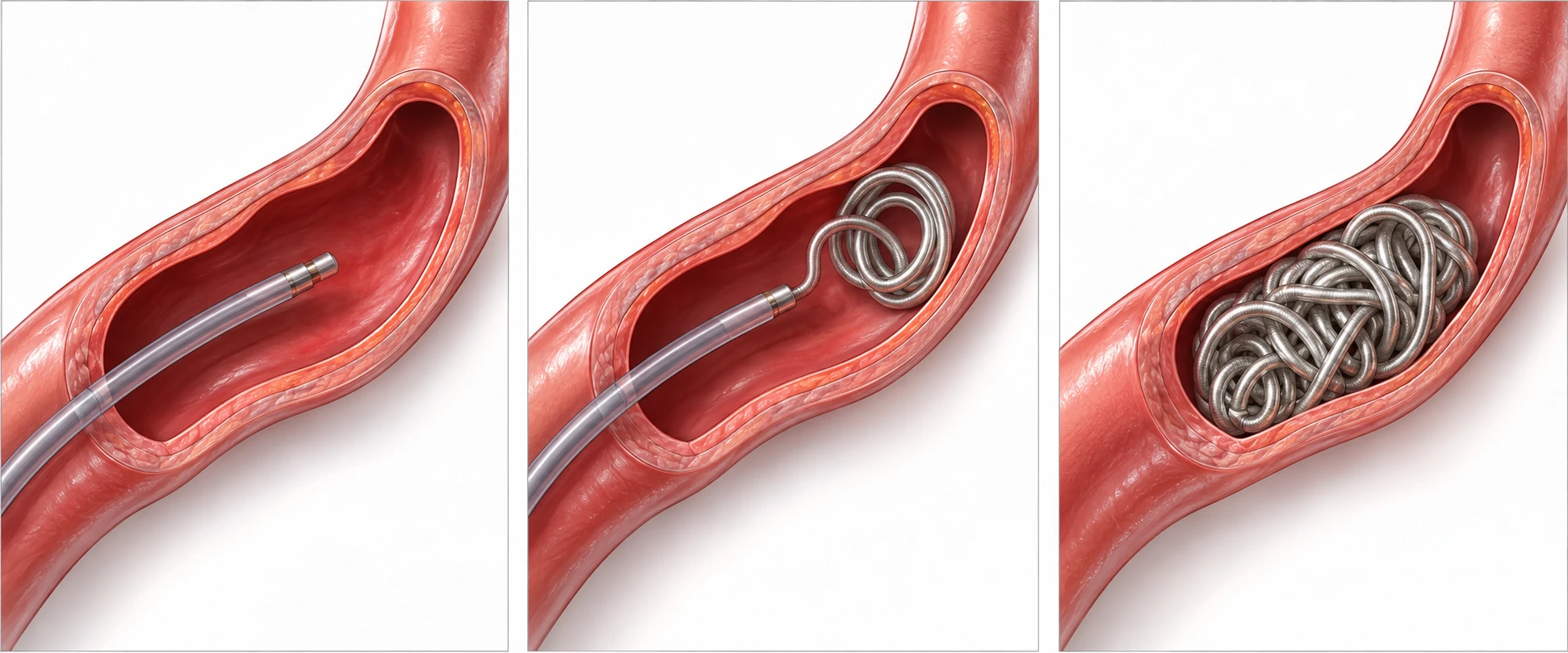
TEMMA® takes the same idea one step further: instead of repeatedly dosing a medication to reduce dural signaling, we gently seal the main blood vessels that supply the dura. This provides a long-lasting reduction in the abnormal signals — without the need for ongoing medication.
The 4-step procedure uses the MMA–dura pathway as its target — safely and durably.